

Project Objectives
The aim of the Caribbean Corona Chronicles Oral History Archive (CCCOHA) project is to create a repository of information about the impact of the Coivd-19 pandemic on persons living within the Caribbean region for researchers and historians. The specific objectives of this project are to:
- collect and preserve firsthand oral accounts of Caribbean persons about their experiences during the Covid 19 pandemic (2020 -);
- store the recorded material and documentation in a digital collection;
- make the online collection accessible to researchers;
- use the collection to produce a short documentary on the Covid-19 pandemic experience in the Caribbean.
The ultimate goal is to ensure that the collection is gathered and stored under proper conditions and protections and made easily accessible to current and future generations.
See Information for Participants
Project Phases
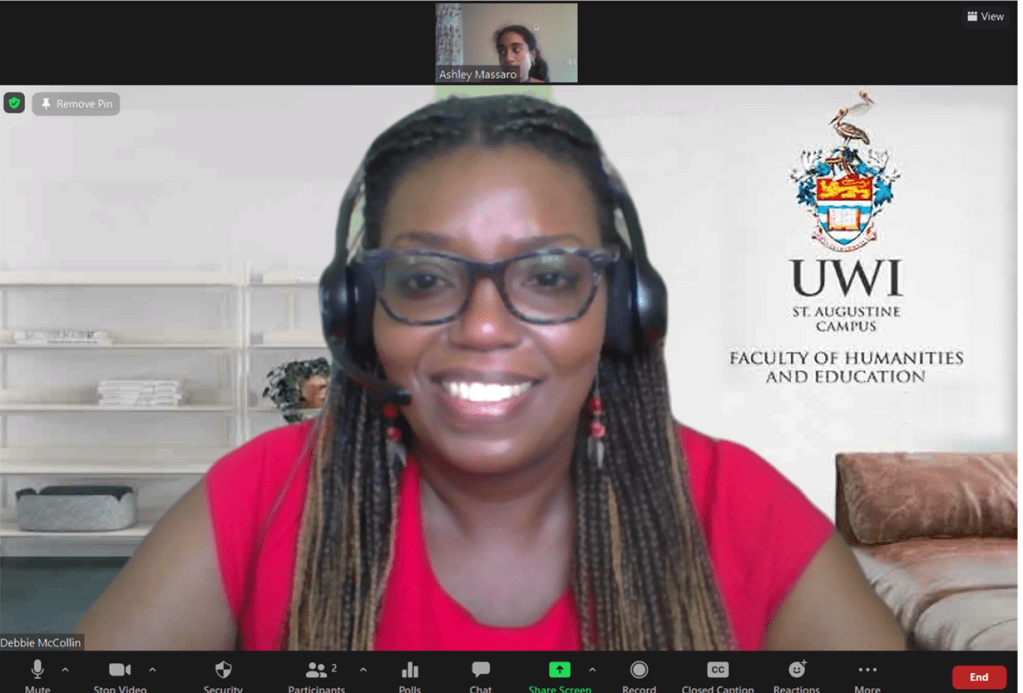
This project will be conducted online and include interviews of inhabitants of Caribbean territories. Interviews will be conducted via the Zoom Web Conferencing platform. These recordings will be stored in an online research repository called UWISpace.
This will be three phase study running from 31 July 2021 to 31st December 2026.
Phase 1 Collection
This phase will run from 31st July 2021 to 31st July 2026 and will involve the collection of recorded online interviews and the creation of an online repository for these interviews.
Phase 2 Transcription and Data Entry
This phase will run from 31st July 2026 to 31st December 2026 and will involve the transcription of the interviews and completion of the database.
Phase 3 Media Production
This phase will run from 31st December 2026 to 31st July 2027 and entail the identification of prominent themes from the repository and the production of a short online documentary based on the identified themes.
Project Methodology
Oral History
This study utilises an oral history approach. Oral history is defined by The Oral History Association as “a method of gathering, preserving and interpreting the voices and memories of people, communities, and participants in past events”. Donald Ritchie, author of Doing Oral History, further explains that it “collects memories and personal commentaries of historical significance through recorded interviews” (19). Moreover, Neugebauer argues that audio and video recording archives play a critical role in “the documentation and creation of information for the study of society, community life, and cultural and national identity.” Oral histories traditionally sought to capture the everyday lives and experience of the ordinary, working class and, as such, reflect a more “bottom up” approach. More recently, oral histories have become more inclusive, with the growing understanding that “no one group had an exclusive understanding of the past”, according to Ritchie (Doing Oral History, A Practical Guide (2nd edition). Oxford: Oxford University Press. 2003, 24). The Caribbean Corona Chronicles Oral History Project therefore uses this historical approach to document the experiences of Caribbean persons from different territories during the Covid-19 pandemic (2020 -) through semi-structured interviews using a digital platform and thus provides references and context for the study of all spheres of Caribbean society in this critical period.
Though oral history can be subjective and a certain amount of distorted recollection is expected in the interview process, a sufficiently large interview pool and the fact that the experiences being recorded occurred in the very recent past will help to mitigate these issues.
Digital Recording and Storage
Two major arguments put forward by Cohen and Rosen in their seminal work, Digital History: A Guide to Gathering, Preserving and Presenting the Past on the Web, provide strong bases for the use of digital technology for collection and storage in this archival project. The first is the claim that “the web can be a valuable yet inexpensive tool for reaching individuals across the globe” (Pittsburg: University of Pennsylvania Press, 2005,160). The digital engagement and recording of the interviews via Zoom will be a cost effective, quicker and easier method of connecting with persons in various territories, time zones, areas of employment and socio-economic groups.
The second argument by Cohen and Rosenzweig that “a significant segment of the record of modern life exists in digital form” (160) is attested to by the transformation that has taken place during the period of the pandemic where countrywide-shutdowns have led to increased digital activity whether for work or play. Therefore, the use of the digital platform to record interviews is appropriate under the present circumstances. It will add to the historical record as greater online engagement has become a significant aspect of the Caribbean Covid-19 experience. It is obvious that the inclusion of digital elements in the project opens the door to another area of analysis of the historical era and increases the access to the collection.
Though cognizant of the fact that the Digital Divide (the uneven distribution of information and communication technologies) will affect the subject pool in a digital project, it is clear that the increase in general internet activity over the period has made more persons knowledgeable about and accepting of the digital conferencing platforms. This will certainly enhance the interviewee pool and quality of the collected material of a project such as this.
Interview Subjects
This study is dependent on acquiring a cross section of persons residing in the Caribbean. As such, countries were identified that covered both the Greater and Lesser Antilles and those considered part of the continental Caribbean eg. Belize and Guyana. The allocation of interviews was based on the population size of each country and the number of researchers available in said (or connected) territories. Consideration will also be given to interviewing persons from various socio-economic, political, religious and ethnic backgrounds and geographic locations within the countries. Gender equity within categories has also been considered in the study design.
 The Caribbean Corona Chronicles